The Unscripted Elite: How America's Wealthiest Are Trading Formality for Genuine Connection
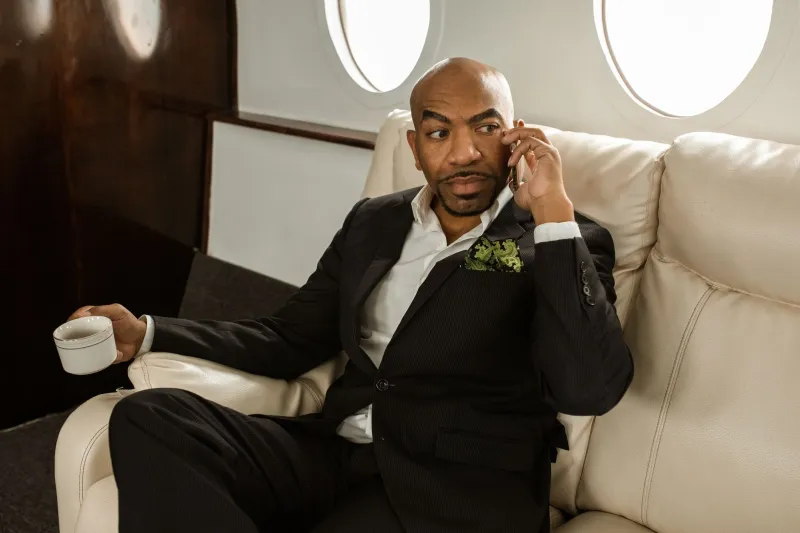
There is a particular kind of exhaustion that accompanies a life lived entirely within protocol. The choreographed handshake, the rehearsed pleasantry, the precisely calibrated dinner seating — these rituals once served as the operating language of the American elite. They signaled membership, conferred credibility, and maintained the invisible architecture of social hierarchy. For generations, mastering this language was the price of admission to the most consequential rooms in the country.
Today, a growing number of ultra-high-net-worth individuals are declining to pay that price. Not out of ignorance, and certainly not out of indifference. Rather, they are making a deliberate, considered choice to abandon the performance of refinement in favor of something considerably harder to manufacture: authenticity.
The Exhaustion of Performance
To understand why this shift is happening, one must first appreciate what formal social protocol actually demands. At its most rigorous, it requires the suppression of genuine reaction, the subordination of personal instinct to institutional expectation, and the constant maintenance of a curated self. For individuals who have spent decades building empires that depend on their capacity for clear-eyed judgment, this level of sustained performance carries a real cognitive and emotional cost.
Several prominent American family office principals and founders — individuals whose combined net worth stretches well into the billions — have, in recent years, begun structuring their most important meetings without agendas, their most significant dinners without formal seating arrangements, and their philanthropic partnerships without the traditional gatekeeping of advisory boards. The signal being sent is unmistakable: I am not here to perform. I am here to connect.
This is not anti-intellectualism, nor is it a rejection of culture. It is, in many ways, a more demanding standard. Anyone can learn the correct fork to use at a state dinner. Far fewer people can walk into an unscripted conversation with a stranger and generate the kind of trust that moves capital, builds institutions, or changes lives.
Authenticity as the New Luxury Signal
In the broader luxury landscape, the concept of radical authenticity has been gathering momentum for some time. The most coveted objects in today's ultra-premium market are not those that announce themselves most loudly, but those that reveal their value only to those who already understand it. The same logic, it appears, is now being applied to human interaction.
When a billionaire arrives at a private gathering in an unremarkable vehicle, declines the preferred table, and spends the evening in genuine conversation with a first-generation entrepreneur rather than networking among peers, the message is layered and deliberate. It communicates that social theater holds no appeal — that the individual in question has moved beyond the need for external validation and is operating from an entirely different set of motivations.
At Royal Platinum UAE, we have observed this phenomenon with particular interest among our American clientele. Those who seek our most exclusive engagements are, increasingly, individuals who place the highest premium not on ceremony, but on candor. They want experiences that strip away pretense and deliver something real — whether that is a private dialogue with a world-class thinker, an unmediated encounter with a piece of cultural heritage, or simply a space in which they are permitted to be entirely themselves.
The Business Case for Dropping the Mask
There is, it turns out, a compelling strategic rationale for abandoning formality in high-stakes relationships. Research in behavioral economics has long suggested that perceived authenticity accelerates trust formation — and in the world of ultra-high-net-worth dealmaking, trust is the foundational currency. Due diligence can be delegated. Character assessment cannot.
Several of the most significant private equity partnerships and family office co-investments of the past decade have been initiated not in formal boardrooms but in settings deliberately stripped of institutional scaffolding: fishing trips in Montana, early-morning runs in Central Park, informal dinners at someone's home rather than a Michelin-starred venue. The informality is not accidental. It is engineered to reveal character under conditions where the usual armor has been set aside.
This approach also has profound implications for philanthropy. The most transformative charitable initiatives currently reshaping American civil society are being driven not by traditional foundation structures with their elaborate governance rituals, but by small, trust-based networks of aligned individuals who share values, speak plainly, and move quickly. The protocol has been replaced by something more durable: a shared moral framework that does not require constant renegotiation.
The Paradox Resolved
The apparent paradox at the heart of this trend — that the most refined individuals are choosing to abandon the markers of refinement — resolves itself once one accepts a more expansive definition of sophistication. True sophistication has never been about adherence to convention. It has always been about the capacity to discern what genuinely matters and to pursue it with clarity and courage.
For centuries, formal protocol served a practical purpose: it created a shared grammar that allowed strangers to interact safely, predictably, and productively. In an era before reputation was instantaneously searchable and character could be assessed through a thousand digital signals, these conventions provided essential scaffolding. They were a technology for managing uncertainty.
The ultra-wealthy of 2025 operate in a fundamentally different information environment. They have access to deeper, faster, more nuanced intelligence about the people they interact with than any previous generation of elites. In that context, the old scaffolding is not just unnecessary — it is, in many cases, actively counterproductive. It slows the formation of genuine connection and introduces noise into a signal that would be cleaner without it.
Refinement Redefined
What does this mean for those who aspire to engage authentically within the highest echelons of American wealth? It means, above all, developing the capacity to be genuinely present — not as a performance, but as a practice. It means cultivating the kind of intellectual and emotional depth that makes unscripted conversation not merely tolerable but genuinely compelling. And it means understanding that the most powerful thing one can offer in any room is not a perfected social persona, but a fully inhabited human one.
At Royal Platinum UAE, this understanding shapes everything we do. The experiences we curate, the environments we create, and the relationships we facilitate are all designed with a single principle in mind: that true luxury, at its most elevated, is the freedom to be entirely, unapologetically oneself. In a world that has spent centuries insisting otherwise, that freedom may be the rarest thing of all.