Certified by No One: How America's Ultra-Wealthy Have Built Their Own Architecture of Absolute Verification
There is a particular irony embedded in the machinery of modern luxury certification. The very systems designed to signal excellence—Michelin stars, GIA grading reports, independent watchmaker rankings, sommelier-endorsed wine scores—were conceived as tools of consumer confidence. They exist to bridge a knowledge gap. And for the overwhelming majority of buyers, they serve that function admirably.
But America's ultra-wealthy are not the overwhelming majority of buyers.
For individuals whose net worth renders the price differential between a certified and uncertified acquisition largely inconsequential, the value proposition of third-party verification collapses almost entirely. What replaces it is something far more rigorous, far more personal, and far more revealing about the true nature of elite discernment: a parallel quality architecture built from human capital, proprietary methodology, and an almost obsessive commitment to firsthand knowledge.
This is the platinum standard. And it answers to no governing body.
The Problem With Ratings Designed for Everyone
Institutional certification systems carry an inherent structural limitation: they are built to serve broad markets. A diamond grading report from a recognized gemological laboratory provides a standardized framework that allows a buyer in Dallas to trust a stone sourced from Antwerp without ever touching it. A hotel rating communicates baseline expectations to a traveler who has never visited a particular city. These are genuinely useful instruments—for transactions where asymmetric information poses a meaningful risk.
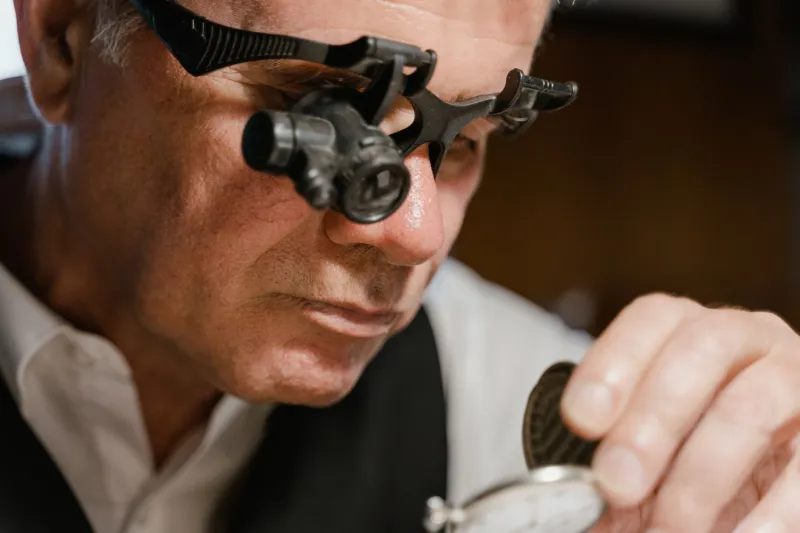
At the highest tiers of wealth, that asymmetry rarely exists in the same form. An individual commissioning a one-of-a-kind timepiece from an independent atelier in Geneva is not consulting a rating. They are flying to Geneva. They are meeting the watchmaker. They are examining the movement under magnification with their own horologist present. The certification, had one existed, would have told them nothing they could not verify—and nothing that would have mattered more than the relationship itself.
This is not elitism for its own sake. It reflects a sophisticated understanding of what ratings actually measure: conformity to a standardized rubric. And conformity, by definition, cannot capture the singular.
The Rise of the Personal Advisory Council
What has emerged in its place is something closer to a private intelligence network. Among America's most discerning high-net-worth individuals, it has become increasingly common to retain what might be described as a personal advisory council—a rotating constellation of domain experts whose sole function is to authenticate, evaluate, and contextualize acquisitions on behalf of a single client.
These councils are not fixed bodies. They are assembled situationally, drawing from a deep bench of specialists: a materials scientist for evaluating bespoke textile commissions, a former auction house specialist for pre-market art acquisitions, a master perfumer for fragrance curation, a structural engineer for assessing the integrity of historic properties. The composition shifts with the nature of the acquisition. The standard does not.
In the UAE—where Royal Platinum operates at the intersection of extraordinary craftsmanship and extraordinary clientele—this model is not merely familiar. It is foundational. The region's most significant transactions have long been governed by personal relationships and expert counsel rather than institutional endorsement. American clients who engage with the UAE luxury ecosystem often find that this orientation toward bespoke verification aligns precisely with the systems they have independently constructed at home.
Proprietary Testing and the Methodology of Certainty
Beyond the advisory model, a subset of ultra-high-net-worth individuals have gone further still—developing proprietary testing protocols that allow them to evaluate acquisitions against benchmarks they have themselves established over years of deliberate study.
Consider the collector who has spent two decades acquiring significant wristwatches. Over that period, they have handled thousands of movements, consulted with independent watchmakers across four continents, and developed a tactile and visual literacy that no certification body formally recognizes—but that exceeds, in practical terms, the evaluative capacity of most credentialed appraisers. Their personal standard is not derived from an external rubric. It is the rubric.
This phenomenon extends across categories. A serious oenophile with thirty years of cellar management experience and access to the world's most significant private collections develops a palate that renders the 100-point scale not wrong, exactly, but insufficient. A collector of contemporary art who has maintained direct relationships with studios, galleries, and institutional curators for decades possesses provenance intelligence that no certificate of authenticity could replicate.
The methodology of certainty, at this level, is experiential. It is accumulated. And it is, by its nature, non-transferable.
When Verification Becomes a Form of Intimacy
There is a dimension to this shift that rarely surfaces in analytical frameworks but that anyone who operates within elite acquisition circles recognizes immediately: the act of personal verification has become a form of intimacy with the object or experience itself.
To authenticate something through your own expertise—or through a trusted advisor whose judgment you have cultivated over years—is to enter into a relationship with that acquisition that no certificate can mediate. The knowledge is yours. The certainty is earned. And the object, once acquired, carries with it the full weight of that process.
This is not incidental to the experience of luxury at the highest tier. It is, increasingly, the experience. The provenance of the verification matters as much as the provenance of the object.
In this sense, the platinum standard is not simply a quality control mechanism. It is an expression of a particular philosophy of ownership—one in which the collector's intelligence and the object's excellence are in constant dialogue.
The Institutional Response and Its Limits
It would be inaccurate to suggest that traditional certification bodies are unaware of this dynamic. Several major institutions have introduced ultra-premium tiers of service, private consultation programs, and bespoke appraisal frameworks explicitly designed to appeal to clients for whom standard certification feels inadequate. These offerings are not without value.
But they face a structural ceiling. An institution that serves both the broad market and the apex client is, by definition, optimizing for multiple constituencies. The ultra-wealthy individual building a private verification architecture is optimizing for exactly one: themselves. That asymmetry of focus produces a quality of scrutiny that no institutional offering can fully replicate.
A New Standard, Answerable Only to Its Creator
What the most discerning Americans have recognized—and what the luxury ecosystem centered in the UAE reflects back to them with particular clarity—is that the highest standard of quality is ultimately personal. It is the product of sustained engagement, expert relationships, and an unwillingness to accept the convenient shorthand of external validation as a substitute for genuine understanding.
Certification will always have its place. But for those who have moved beyond it, the question is no longer whether something meets an established benchmark. The question is whether it meets theirs.
And that standard, by design, belongs to no one else.