Made for One: The Rise of the Commission Economy Among America's Ultra-Wealthy
There is a moment—different for every collector, but recognizable in retrospect—when the acquisition of branded luxury goods stops feeling like an achievement and begins to feel like participation in a very expensive queue. The handbag that required a year on a waiting list. The watch that arrived with a certificate confirming its membership in a limited edition of five hundred. The bespoke suit tailored to measurement but constructed from the same cloth offered to every client who could afford the house's premium tier.
For a growing segment of America's ultra-wealthy, this moment has arrived—and the response has not been to seek rarer or more expensive versions of the same thing. It has been to exit the branded luxury system entirely and invest instead in something the market cannot manufacture at scale: a direct, sustained relationship with a craftsperson or designer whose entire creative energy is devoted, for a defined period, to a single commission.
This is the bespoke economy—and for those who have entered it, there is no return.
The Collapse of Brand Prestige as a Differentiator
The irony of the luxury industry's extraordinary success over the past three decades is that it has, by its own logic, undermined the very proposition it sells. When a heritage house expands its production to meet global demand, when its entry-level products become accessible to millions of aspirational consumers worldwide, and when its most coveted pieces are acquired by thousands of buyers simultaneously, the signal that ownership once conveyed—genuine rarity, genuine distinction—is diluted beyond recovery.
Mass-market customization, enthusiastically adopted by major luxury brands as a response to this problem, has proven a partial solution at best. The ability to select from a curated palette of colors, materials, and monogram options does not constitute bespoke creation. It constitutes personalized production—a fundamentally different category that preserves the efficiency of manufacturing while offering the aesthetic of individuality. To the genuinely discerning eye, the difference is immediately apparent.
For ultra-high-net-worth Americans who have spent decades developing exactly this kind of discerning eye, personalized production is not a luxury. It is a disappointment dressed in the language of one.
What True Commission Requires
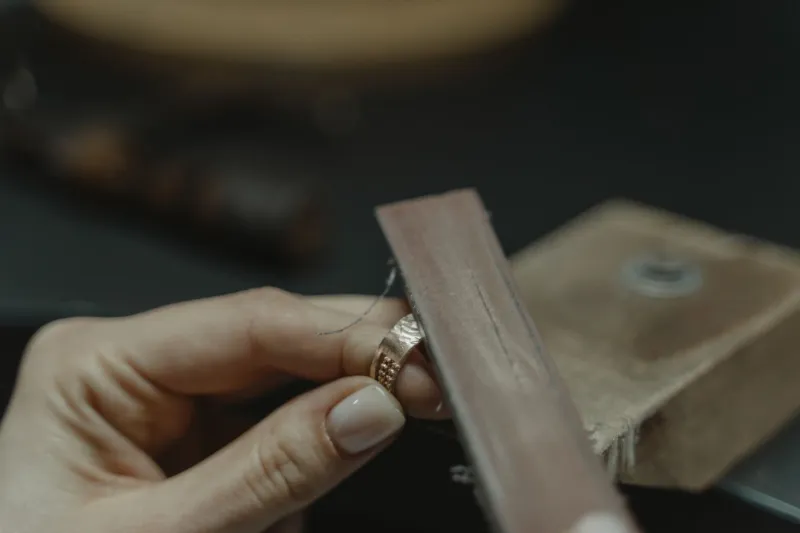
Entering the genuine bespoke economy demands a different relationship with time, process, and uncertainty than branded luxury consumption has conditioned its customers to expect. A true commission is not a transaction. It is a collaboration—one that unfolds over months or years, involves genuine creative exchange, and produces an outcome that neither party could have specified precisely at the outset.
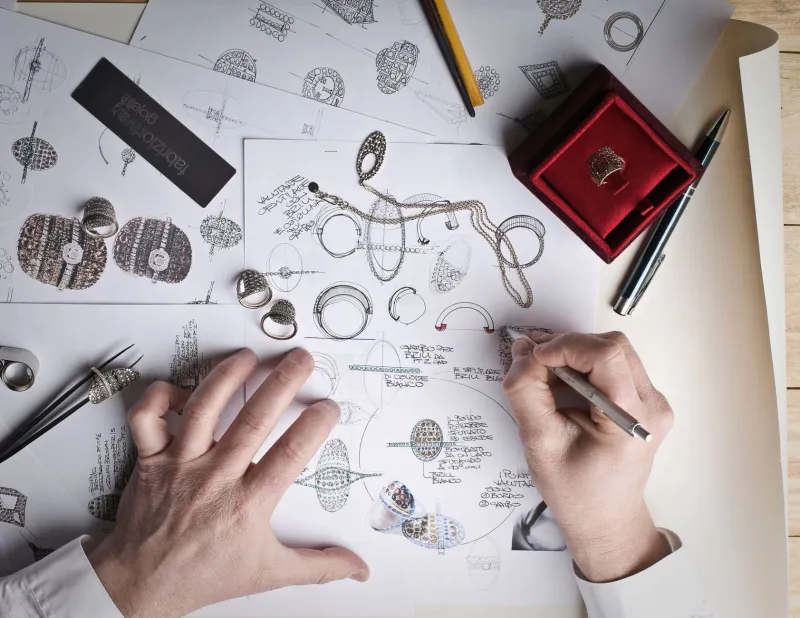
The American collectors who have built commissioning practices describe a process that begins not with a brief but with a conversation—sometimes many conversations—about context, intention, and the collector's own evolving understanding of what they are trying to bring into the world. The craftsperson or designer brings their own expertise, aesthetic sensibility, and material knowledge to bear on this dialogue. What emerges is the product of genuine creative partnership, shaped by both parties in ways that make it irreducibly singular.
This irreducibility is the point. An object that has been made for one person, through a process that engaged that person's specific history and sensibility, cannot be replicated—not because the craftsperson is unwilling, but because the conditions that produced it no longer exist. The commission is, by its nature, a one-time event.
The UAE as a Commission Hub
For American collectors who have discovered the bespoke economy, the UAE has emerged as an extraordinarily productive environment in which to pursue it. The Emirates' unique cultural position—at the intersection of Arab, South Asian, Persian, and African craft traditions, with a cosmopolitan overlay that has attracted skilled artisans and designers from across the globe—creates a concentration of creative talent that is difficult to match anywhere in the world.
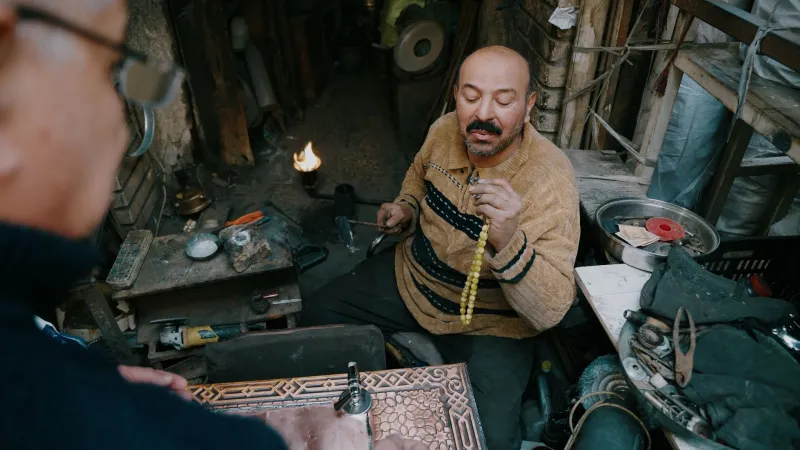
The range of craft traditions accessible within the UAE is genuinely remarkable. Master jewelers working in Emirati gold-working traditions of extraordinary refinement. Textile artists drawing on the rich heritage of South Asian embroidery and weaving, adapted to contemporary commissions. Furniture makers and interior designers whose work synthesizes Islamic geometric tradition with modernist spatial thinking. Ceramicists, calligraphers, perfumers, and glassworkers whose practices are rooted in centuries of accumulated knowledge.
For the American collector accustomed to traveling to individual cities—Florence for leather, Kyoto for ceramics, Paris for haute couture—the UAE offers an unusual compression of access. The world's craft traditions have, in significant measure, come to the Emirates. The collector who establishes a presence there finds themselves at the center of a creative ecosystem that would otherwise require a lifetime of international travel to navigate.
The Economics of the Unrepeatable
The bespoke commission economy operates on a fundamentally different value logic than the branded luxury market. In the latter, price reflects brand equity, production cost, and artificial scarcity engineered through controlled supply. In the former, price reflects time—the time of a master craftsperson whose attention cannot be divided, multiplied, or outsourced without destroying the very quality that makes the commission valuable.
This creates a market in which price and exclusivity are genuinely aligned rather than theatrically so. There is no waiting list that can be circumvented with the right introduction. There is only the craftsperson's calendar, and the number of significant commissions a single human being can execute in a year is, by definition, small. For collectors accustomed to the frustration of artificial scarcity—where the right relationships can always unlock access—the natural scarcity of genuine mastery is both more limiting and more satisfying.
It is also, increasingly, a sound investment. Objects with verifiable, personally authenticated provenance—made by a named master for a specific client, documented through the relationship itself rather than through institutional certification—have demonstrated a resilience of value that mass-produced luxury goods, however expensive at acquisition, rarely sustain.
A Different Kind of Ownership
Perhaps the most significant transformation that the bespoke economy produces is not in the objects it creates but in the collector's relationship to ownership itself. To commission a work is to participate in its existence in a way that purchasing never permits. The collector who has watched a piece develop over the course of a year—who has seen the false starts, the material experiments, the moments of creative breakthrough—possesses not just the object but the narrative of its becoming.
This narrative is not merely sentimental. It is the deepest form of provenance, the most complete form of authentication, and the most durable source of meaning that luxury can provide. In a market increasingly defined by sophisticated forgery and manufactured distinction, the commission stands apart: made for one, known by one, and carrying within it a story that belongs to no one else.
That is not a product. That is a legacy.