Verified by Hand: How America's Ultra-Wealthy Are Rebuilding Trust in Luxury From the Ground Up
There is a particular kind of unease that has settled over the upper echelons of the luxury market in recent years—quiet, rarely discussed at dinner, but unmistakably present. It is the unease of a collector who cannot be entirely certain that what sits in their possession is what it purports to be. In an age when deepfake technology can fabricate a master craftsman's endorsement, when AI-generated provenance documents pass cursory inspection, and when counterfeit goods have grown sophisticated enough to deceive specialists, the question of authenticity has become the defining anxiety of high-value acquisition.
For America's ultra-wealthy, this is not a peripheral concern. It is the central problem of contemporary luxury consumption—and the solutions they are developing are reshaping the entire architecture of how trust is established, maintained, and transferred in the world's most exclusive markets.
The Failure of Institutional Verification
For decades, the luxury industry relied on a scaffolding of institutional authority: certificates of authenticity, branded packaging, serial numbers, and the reputations of storied houses. These mechanisms worked reasonably well in a world where counterfeiting required significant capital and expertise. That world no longer exists.
The counterfeiting ecosystem has industrialized. Certificates are replicated. Serial numbers are cloned. Even the packaging of the most guarded luxury brands has been reproduced with a fidelity that confounds visual inspection. Meanwhile, the rise of generative AI has introduced an entirely new category of deception—fabricated provenance narratives, synthetic auction histories, and digitally constructed relationships between objects and their supposed origins.
Blockchain-based verification, widely heralded as the solution of the moment, has proven more limited than its advocates promised. While distributed ledger technology can record a chain of custody, it cannot independently verify the authenticity of the object at the origin point. What blockchain certifies is the record, not the reality. Among the most sophisticated collectors in the American market, this distinction has become well understood—and it has prompted a fundamental reconsideration of what verification actually means.
The Return to Relational Authentication
What has emerged in place of institutional verification is something that might be described as relational authentication: a system of trust built not on documents or databases, but on direct, cultivated relationships with the individuals who create, handle, and curate objects of genuine value.
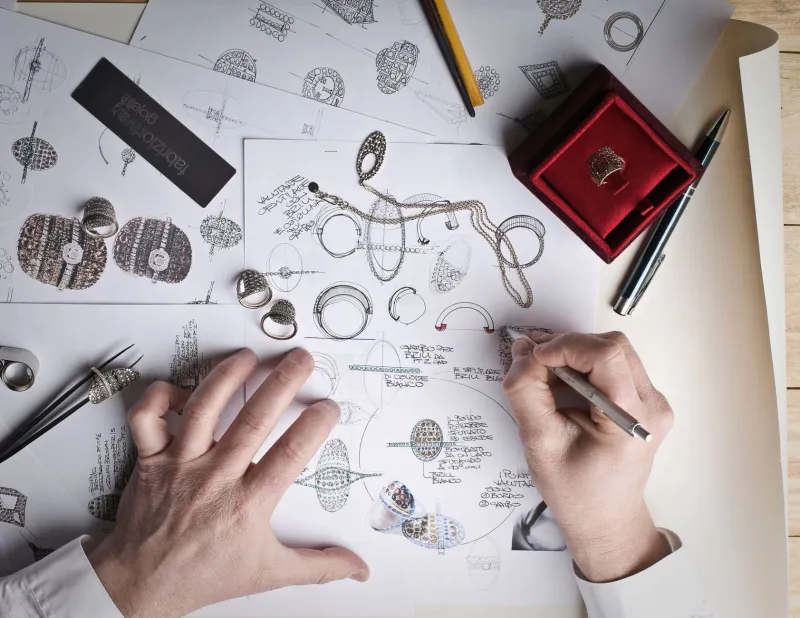
The most discerning collectors in the United States are now investing deliberately in what amounts to a personal network of verification—master craftspeople, independent conservators, material scientists, and cultural historians whose judgment they trust precisely because they have earned it over time. These are not hired consultants retained for a single transaction. They are relationships developed across years, often beginning with studio visits, commissions, and the kind of sustained intellectual exchange that produces genuine mutual regard.
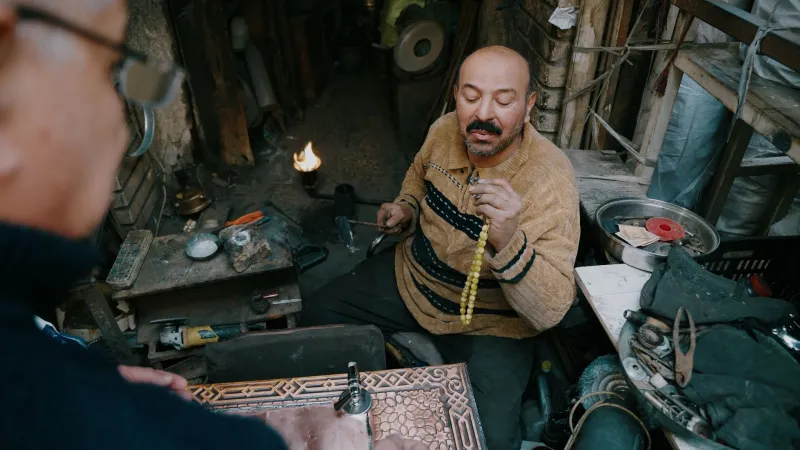
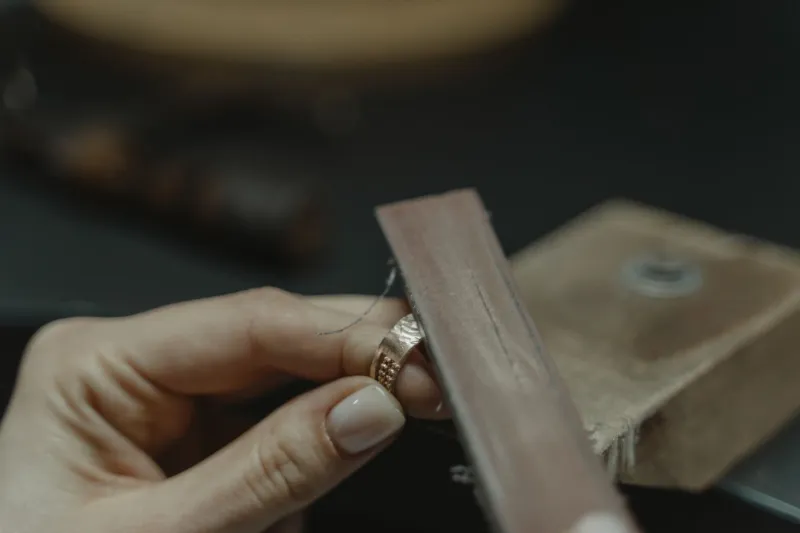
A collector who has spent three afternoons in a Venetian glassblower's workshop, who has watched the specific gesture with which a particular master shapes a gather of molten glass, carries a form of authentication that no certificate can replicate. The knowledge is embodied. It cannot be faked because it was never formalized in the first place.
Provenance as Personal Narrative
This shift toward relational trust has produced a corresponding elevation in the value of what might be called personally authenticated provenance—the story of an object's creation that a collector can tell in the first person, with specific sensory detail, because they were present for part of it.
Among the ultra-wealthy Americans who have developed collecting practices centered on the UAE's extraordinary concentration of international artisans and luxury craftspeople, this kind of direct provenance has become a distinguishing marker of genuine connoisseurship. The Emirates, with their unique position as a convergence point for master craftsmen from South Asia, the Arab world, Europe, and East Africa, offer collectors an unusually rich environment in which to cultivate exactly these relationships.
Commissioning a piece from an Emirati silversmith, visiting the workshop over the course of the work's creation, and developing the kind of ongoing relationship that produces future collaboration—this is authentication that operates at a level no deepfake can penetrate. The collector does not need a certificate. They need only describe what they witnessed.
Human Networks as Verification Infrastructure
Beyond the individual collector-artisan relationship, a more structured form of human verification network has begun to take shape among the American ultra-wealthy. These are informal but highly deliberate circles of collectors, curators, and specialists who share intelligence about sources, craftspeople, and market participants—functioning, in effect, as a distributed authentication system.
Membership in such networks is not purchased. It is accrued through demonstrated judgment, reciprocal sharing of expertise, and the kind of long-term reliability that makes one's assessments worth seeking. The currency of these circles is reputation, and reputation, unlike a certificate, cannot be manufactured overnight.
What these networks provide is something the institutional verification ecosystem has never been able to offer: real-time, contextual intelligence about the current state of specific markets, specific craftspeople, and specific categories of objects. When a particular source becomes compromised, or when a previously reliable intermediary's standards begin to slip, the human network knows before any formal record reflects the change.
The Premium on Verified Relationships
For Royal Platinum UAE's clientele, the implications of this shift are both practical and philosophical. Practically, it means that the most valuable service a luxury intermediary can offer is not access to objects—it is access to verified relationships with the people who create them. The introduction to a master craftsman, facilitated by someone whose judgment is trusted, carries a premium that no catalogue listing can command.
Philosophically, it represents a return to a very old understanding of luxury: that the highest value attaches not to the object in isolation, but to the human story that surrounds it. In a world drowning in sophisticated fakes, the most powerful authentication is the one that lives in the collector's own memory—present at the creation, witnessed in person, carried forward as knowledge that belongs to no database and can be stolen by no algorithm.
This is the platinum standard of contemporary luxury acquisition. Not a mark stamped on a surface, but a relationship forged in a workshop—and the irreplaceable certainty that comes with having been there.