The Substance Beneath the Surface: How America's Elite Are Mastering Materials Science as the New Language of Luxury
For decades, the language of luxury was spoken in logos. A monogram embossed on leather, a nameplate affixed to a watch dial, a label sewn into the lining of a coat — these were the grammar of aspiration, legible to anyone who cared to look. That era is not simply fading. Among a particular stratum of American wealth, it has been deliberately retired.
What has replaced it is something far more demanding: a rigorous, almost scholarly engagement with the physical substance of the objects one acquires. Material composition, molecular integrity, sourcing transparency, and provenance verification have become the new metrics by which the truly discerning assess value. This is not a passing trend. It is a structural shift in how ultra-high-net-worth Americans define quality — and, by extension, how they define themselves.
From Aesthetic Preference to Technical Authority
The transformation begins with a simple but consequential premise: that genuine expertise cannot be faked. In a world where high-quality counterfeits have become nearly indistinguishable from originals at the surface level, the only reliable defense is depth of knowledge. A collector who understands the precise grain structure of a Damascus steel blade, or who can identify the specific weaving technique indigenous to a particular region of the Arabian Peninsula, possesses something that no amount of money alone can purchase — authority.
This authority is increasingly worn as a status marker in its own right. Among the circles that matter most to America's ultra-wealthy, the ability to speak credibly about a material's origin, its processing history, and its long-term behavioral properties commands a form of respect that no price tag can confer. The question is no longer "What did this cost?" It is "Do you understand what this is?"
That distinction carries profound implications for the luxury market — and for the suppliers, curators, and intermediaries who serve it.
The Rise of the Informed Acquirer
Consider the collector who, over the course of several years, has developed a working knowledge of rare platinum-group metals sufficient to evaluate raw material purity without laboratory assistance. Or the individual who, before commissioning a bespoke garment, travels to verify the conditions under which the source fiber was cultivated. These are not eccentricities. They are expressions of a broader philosophy: that ownership without comprehension is merely possession, and that true luxury demands a relationship with the object that extends far beyond the transaction.
The UAE has become a critical node in this ecosystem of informed acquisition. Its position at the intersection of global trade routes, combined with decades of investment in specialized manufacturing and artisanal expertise, has made it a destination of genuine consequence for those pursuing materials of exceptional and verifiable quality. From rare alloys processed in facilities operating at standards that exceed conventional industry benchmarks, to natural textiles sourced through supply chains maintained with uncommon transparency, the Emirates offer access to materials that satisfy not merely the eye but the intellect.
What Materials Literacy Actually Demands
To describe this phenomenon as "knowing your materials" is to understate it considerably. What the most serious practitioners have developed is closer to a discipline — one that draws on metallurgy, textile science, environmental chemistry, and historical craft knowledge in roughly equal measure.
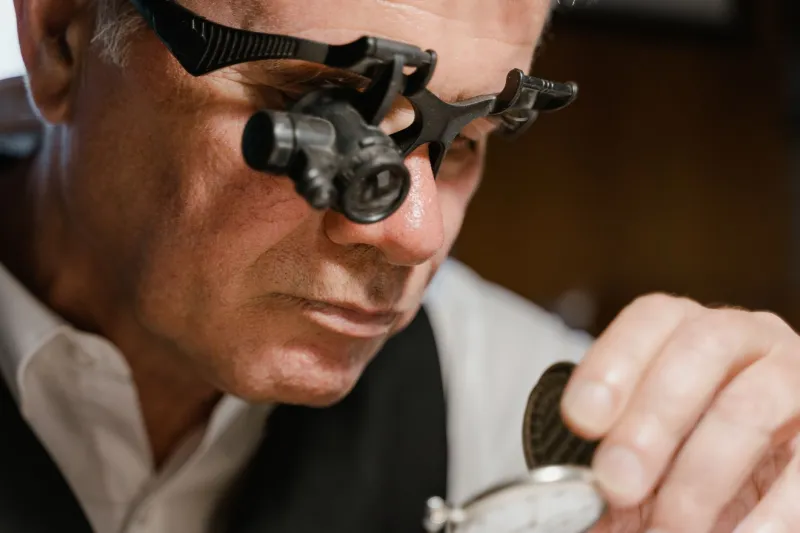
A collector focused on timepieces, for instance, may study the specific properties of silicon-based escapement components, understanding how their thermal stability compares to traditional lever systems under varying atmospheric conditions. One engaged with interior furnishings might develop fluency in the chemistry of natural lacquer — its composition, its curing process, and the environmental variables that affect its long-term performance. These are not casual enthusiasms. They require sustained intellectual investment, access to expert mentorship, and, frequently, direct engagement with the craftspeople and scientists who work at the frontier of their respective fields.
The UAE's specialized suppliers and artisan workshops have become important destinations in this educational journey. Several ultra-wealthy Americans have established ongoing consultative relationships with Emirati craftspeople and materials specialists, treating these engagements not merely as commercial arrangements but as genuine apprenticeships in material knowledge.
Provenance as the Final Frontier
If materials literacy represents the intellectual dimension of this shift, provenance verification represents its practical expression. The question of where a material originates — and the chain of custody through which it traveled before arriving in one's hands — has become as important as the material itself.
This is partly a response to the proliferation of sophisticated misrepresentation in the luxury market. It is also, however, an expression of values. For a meaningful segment of ultra-high-net-worth Americans, the ethical dimensions of sourcing are not peripheral considerations. They are central to the definition of quality. A gemstone extracted through exploitative labor practices is not, in this framework, a luxury good regardless of its optical properties. A textile produced in conditions that compromise the welfare of its artisans carries a cost that no retail price reflects.
The UAE's regulatory environment and its commitment to traceable, ethically managed supply chains have made it particularly well-positioned to serve this demand. Suppliers operating within the Emirates' premium materials sector have invested substantially in documentation infrastructure — creating provenance records of a depth and reliability that satisfies the most rigorous American acquirer.
The Platinum Standard, Reconsidered
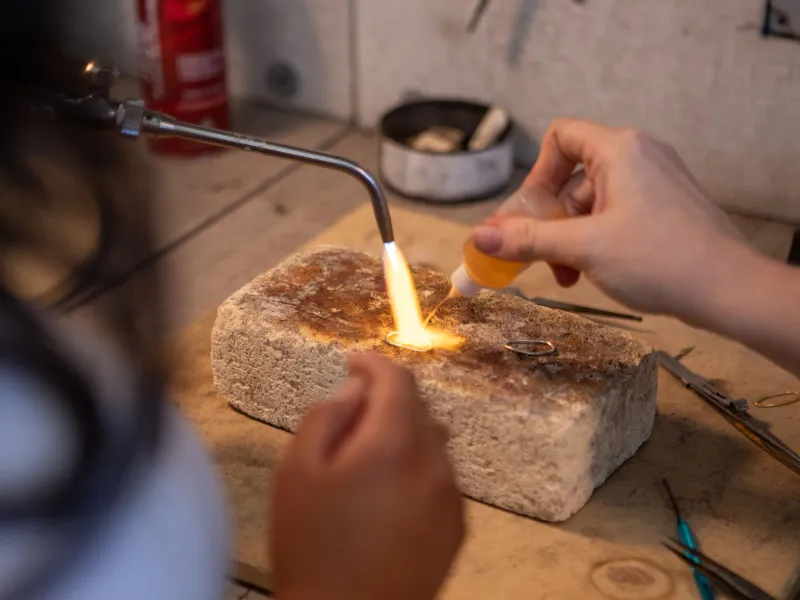
Platinum, as both a material and a metaphor, captures something essential about this moment. It is among the rarest of metals, resistant to corrosion, demanding in its processing requirements, and rewarding in its long-term performance. It cannot be approximated convincingly. It either is what it claims to be, or it is not.
The ultra-wealthy Americans who have embraced materials science as a dimension of their luxury practice are, in a sense, applying that same standard across every domain of acquisition. They are demanding that objects be exactly what they claim — in composition, in origin, in craftsmanship, and in the values embedded in their production.
This is, ultimately, a more exacting form of luxury than anything the logo era produced. It requires more of its practitioners, more of its suppliers, and more of the objects themselves. It is, for precisely that reason, the form of luxury that the most discerning individuals find most satisfying.
At Royal Platinum UAE, this standard is not an aspiration. It is the foundation upon which every engagement is built — because those who understand what genuine quality requires will accept nothing less than its full expression.